Article Content
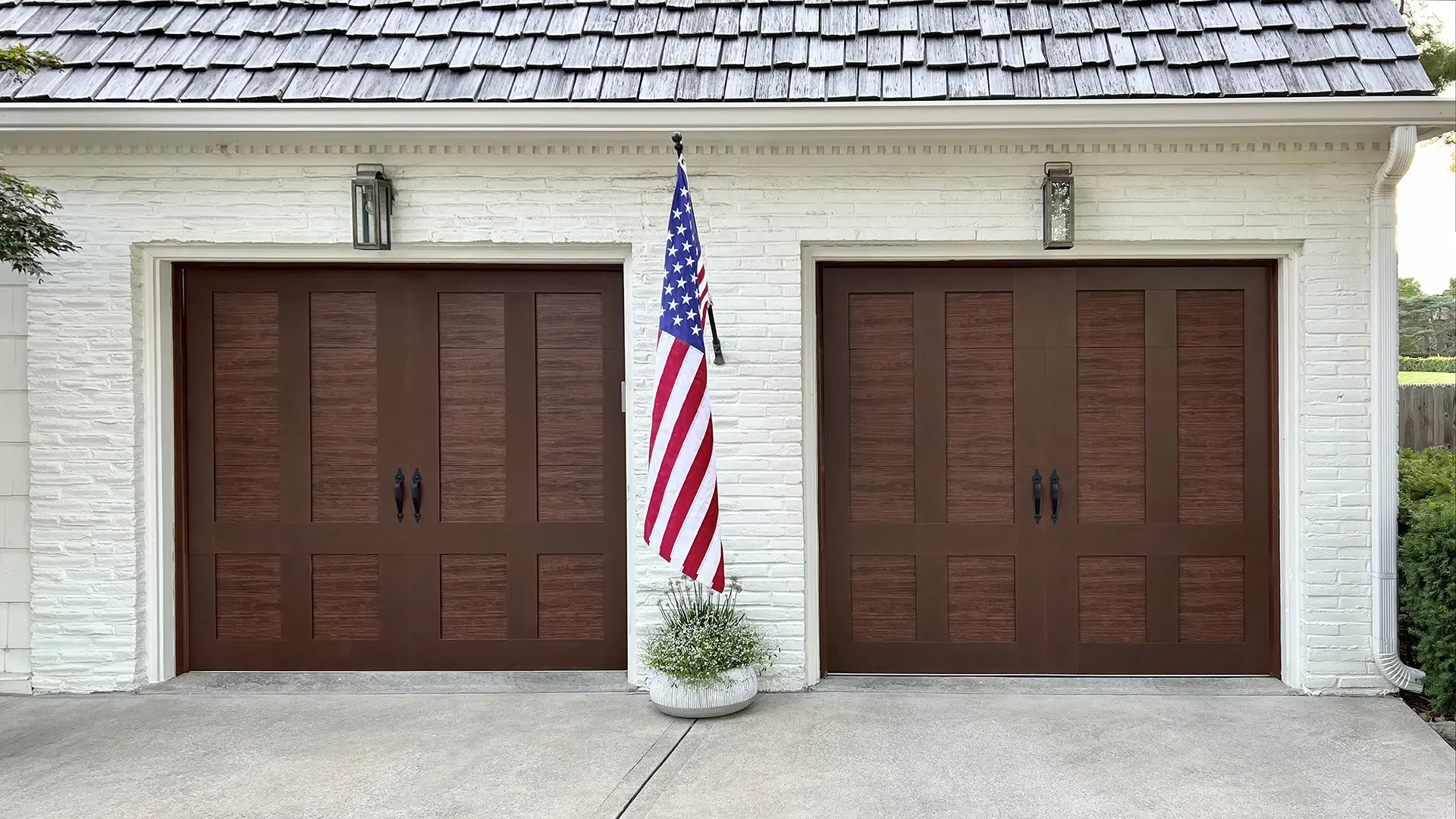
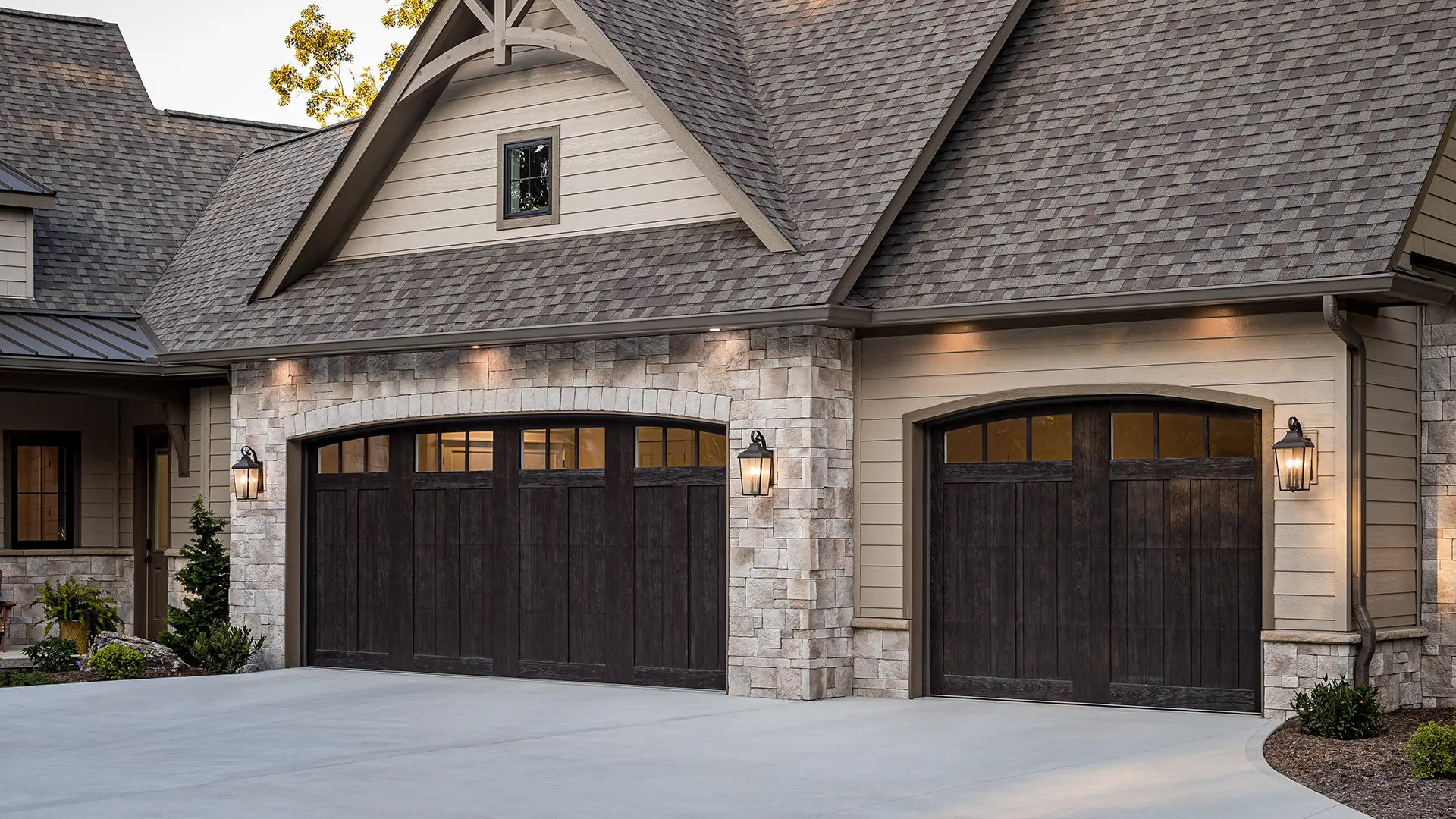
Faux wood garage doors deliver the look of real wood without the maintenance. Modern manufacturing makes them nearly indistinguishable from authentic wood, mimicking mahogany, cedar, oak, and other species with replicated grain and color. The real advantage? They resist warping, cracking, and rotting, require no refinishing, and withstand harsh weather. They're pest-resistant, more affordable than real wood, and typically insulated for better energy efficiency. Customization options range from carriage house to modern styles with various colors and windows. This post explains how these styles can save you money compared to authentic wood. If you want authentic wood aesthetics without sanding, staining, and sealing every few years, faux wood is the smart choice. Clopay offers an interactive designer to help you visualize options.
Love the kind of garage doors with a wood look but not the upkeep? Faux wood garage doors are the answer.
There's something undeniably appealing about a wood garage door including the warmth, the grain, and instant curb appeal. Any homeowner who's lived with one also knows the other side of that story: the sanding, the staining, the sealing, the warping, and the bills that follow. It's a beautiful door that asks a lot in return.
That's why fake wood garage doors have grown so popular. Homeowners no longer have to choose between style and practicality. Today's wood look garage doors deliver the rich aesthetic of real timber while being built from materials engineered to outperform it where it matters most — durability, maintenance, and cost.
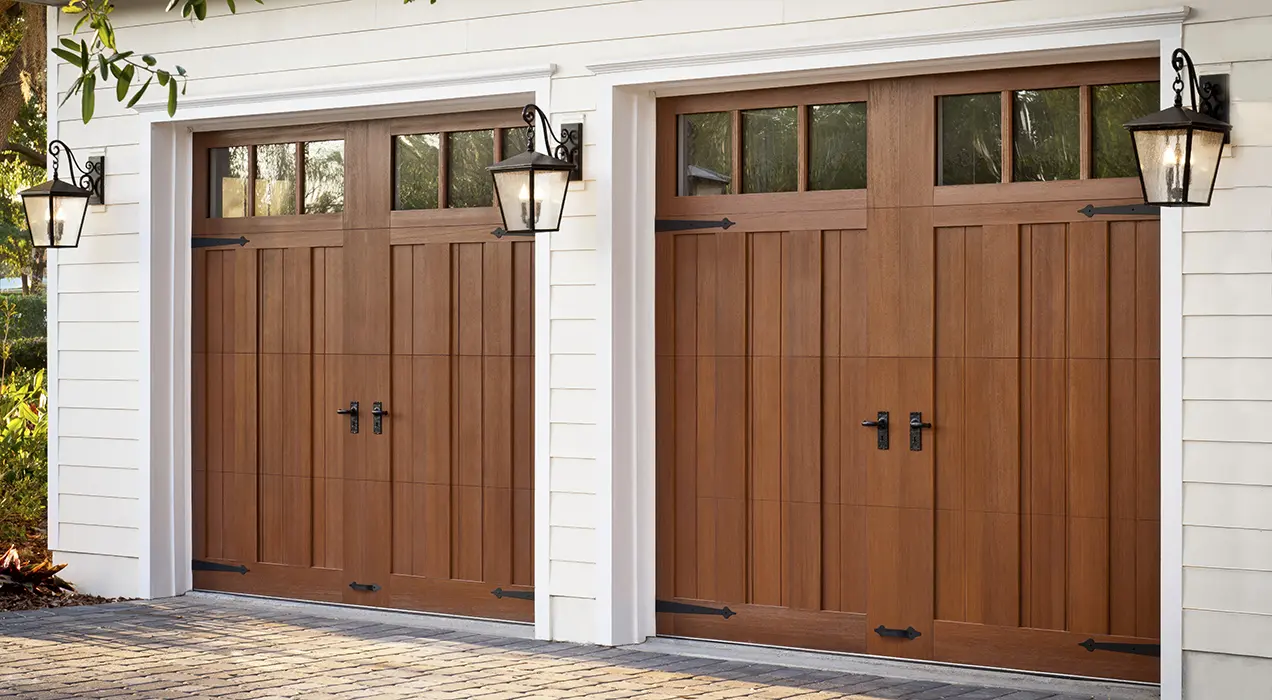
Canyon Ridge® 5-Layer Carriage House door, Design 13 with REC windows in the Dark finish.
The Beauty of Faux Wood
The most common misconception about faux wood garage doors is that they look unconvincing up close. That stopped being true a while ago.
Modern manufacturing has made wood-look garage doors nearly indistinguishable from the real thing. Steel doors can be finished with overlays that replicate the precise texture and color variations of natural wood grain. Composite doors are sometimes molded directly from actual wood pieces, so every groove and knot in the surface came from real timber. The result mimics specific species, like mahogany, walnut, clear cypress, rather than a generic "wood-ish" texture.
Style options are equally broad. Traditional raised-panel designs work well on colonial and craftsman homes. Carriage house styles with decorative hardware suit farmhouses and cottages. Chevron and louver panels add architectural interest. Modern plank designs fit contemporary builds. Some composite lines can even be carved and routed like natural wood, allowing for deep V-groove patterns and custom radius arches that molded materials can't produce.
Built to Last: The Durability of Faux Wood Garage Doors
Real wood is a biological material that responds to its environment. It swells in humidity, cracks in cold, and attracts insects. Without consistent maintenance, deterioration sets in faster than most homeowners expect.
Faux wood garage doors are built to sidestep those problems. Steel and composite cores don't rot, warp, or invite pests. Weather-resistant coatings handle UV exposure. The steel base also makes these doors lighter than solid wood, which reduces strain on openers and hardware over time.
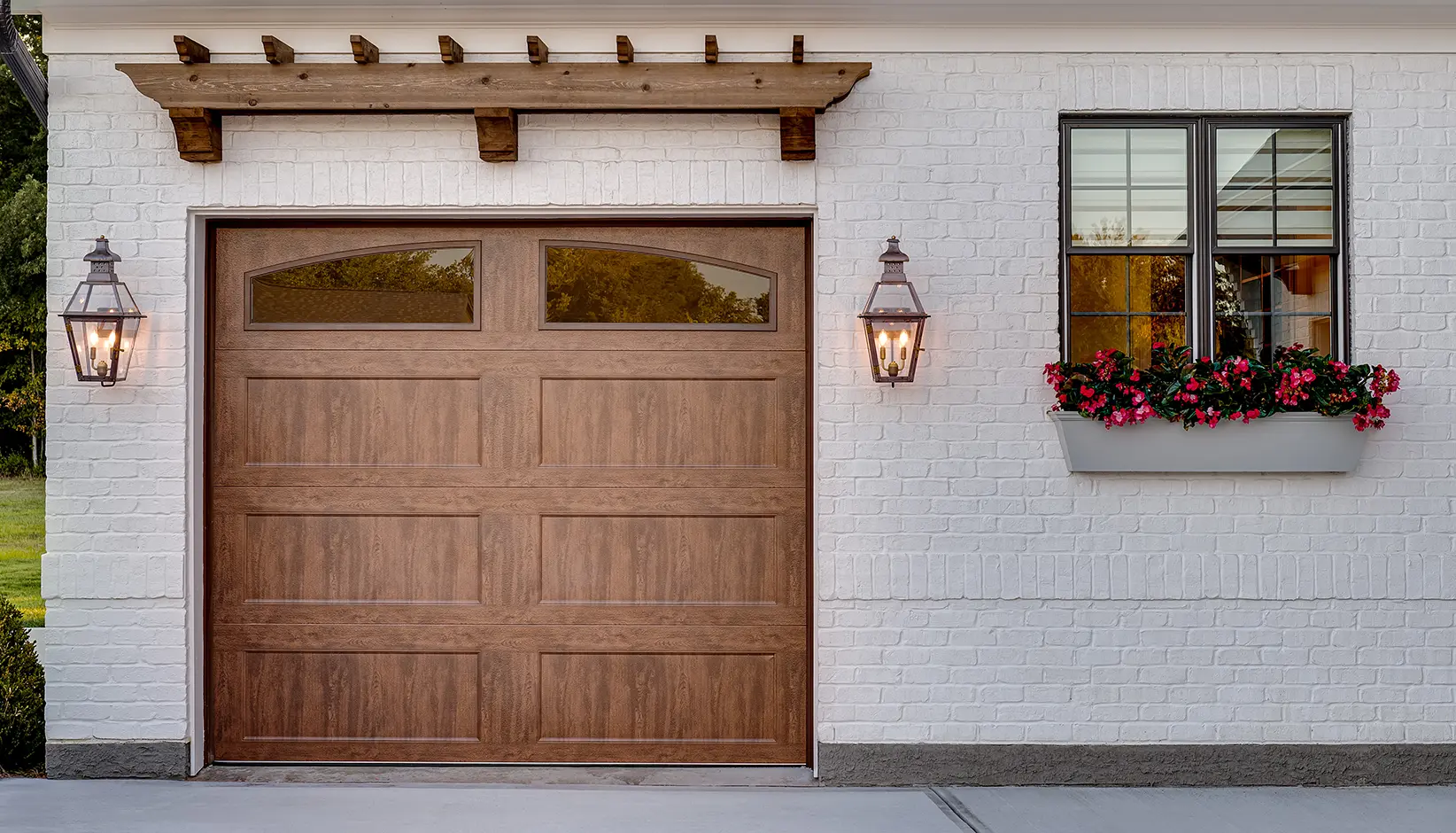
Bridgeport™ Steel garage door with extended recessed panels and ARCH1 Plain windows in Ultra-Grain® Dark finish
Longevity and ease of ownership typically favor faux wood. For homeowners in climates with heavy precipitation, corrosive coastal salt air, or dramatic temperature swings, the long-term durability of a faux wood garage door can be a key consideration.
Low Maintenance, High Style: The Beauty of Garage Doors Wood Look
Real wood garage doors require sanding, staining or painting, and sealing on a regular cycle, typically every one to three years depending on climate. Skip it, and you're looking at fading, cracking, and eventual moisture damage.
Because wood look garage doors are built from engineered materials with protective finishes, routine care amounts to washing the door with soap and water. And a basic annual check — lubricate the tracks, inspect weather seals, look for dents — covers the rest.
The long-term savings from that difference are real. Money that would have gone toward professional refinishing or early replacement stays in your wallet.
Saving Money Without Sacrificing Style: Fake Wood Garage Doors as a Smart Investment
Up front, fake wood doors cost significantly less than real wood, which carries a premium for materials and craftsmanship. Faux wood doors do cost more than a basic steel door, but the comparison to timber typically favors faux wood by a wide margin. Prices range depending on style and customization, but the cost is well below what a premium real wood door commands.
Factor in reduced maintenance over the door's life and the cost advantage compounds. Then there's resale: the Journal of Light Construction's 2025 report found that garage door replacement delivers an average ROI of 268%, potentially adding more than $12,000 to a home's value. Given that the garage door accounts for roughly 40% of a home's exterior facade, that return makes sense. A wood-look door that also requires almost no upkeep is an easy sell to prospective buyers.
Versatility to Match Any Home: Faux Wood Garage Doors for Every Style
Few home improvement products work across as many architectural styles as wood look garage doors do. Carriage house designs with classic panel layouts and optional strap hinges suit traditional homes. Plank designs in walnut or driftwood pair well with contemporary builds. Chevron and louver panels offer something more distinctive for homes that want a stronger visual statement.
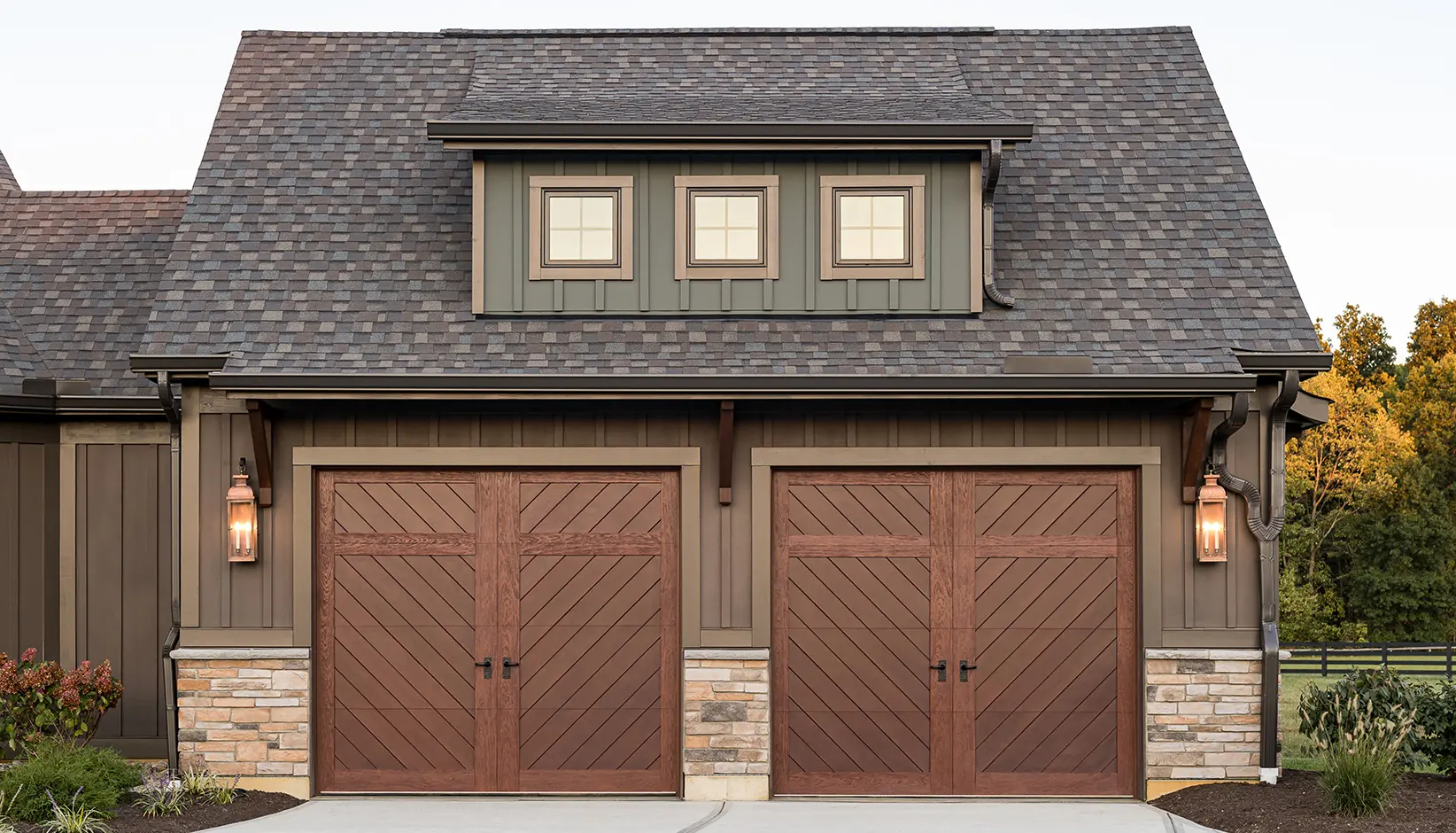
Canyon Ridge® Chevron in Design 11 in Walnut Finish
Homeowners can customize their look by selecting from a range of wood-tone finishes like mahogany, walnut, oak, cedar, or pine. Custom window configurations range from simple rectangles to arched inserts with clear, frosted, or tinted glass. Decorative hardware pulls the whole look together. Whatever the architectural style of the home, there's a configuration that fits it without looking like a compromise.
A Sustainable Choice: Wood-Look Garage Doors and the Environment
Choosing faux wood over real wood reduces demand for natural timber. Many faux wood doors are made from recycled steel or composites manufactured to minimize waste. Clopay's Reserve® Wood Extira® series utilizes a high-performance composite material made from sustainable wood fibers. This moisture-resistant material is created through a specialized manufacturing process that allows it to be routed, carved, and detailed just like natural wood.
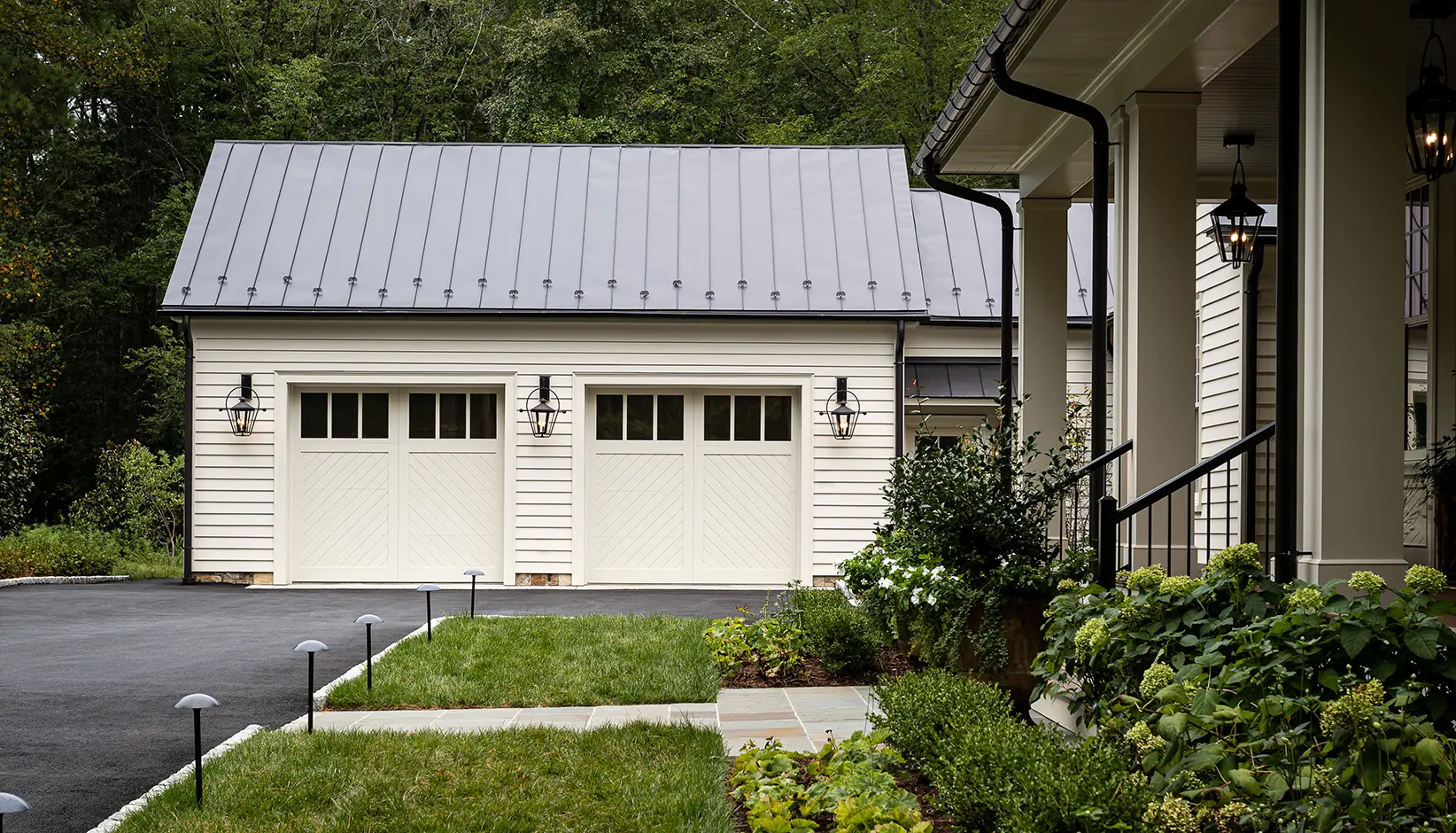
Reserve Wood Extira garage door in custom color Sherwin-Williams Neutral Ground. Photo Credit: Andy Frame
Because these doors last longer and need less maintenance-related replacement, their overall environmental footprint tends to be lower over time than a real wood door that needs refinishing or early replacement. Insulation adds another layer of efficiency. Many faux wood doors are built with polyurethane or polystyrene cores offering R-values up to 20.4. For homes with attached garages, that insulation cuts heat transfer, lowers energy bills, and reduces noise from the street.
Embrace the Beauty and Benefits of Fake Wood Garage Doors
Faux wood garage doors do something that most home improvement products can’t: they solve multiple problems at once. The look of wood, without the rot or the maintenance. Lower cost than real timber, with better long-term durability. Broad enough style options to work on almost any home. And an ROI that makes the investment hard to argue with.
Browse Clopay’s wood-look door collections, and try the online design tool, EZDoor™, to see how different styles look on your home. When you’re ready, reach out to request a quote from a local dealer.